What Actually Happens During a Roof Tear-Off and Re-Roof
From the first pry bar to the last nail sweep, here is what a real re-roof looks like start to finish.
September 6, 2026 · 4 min read
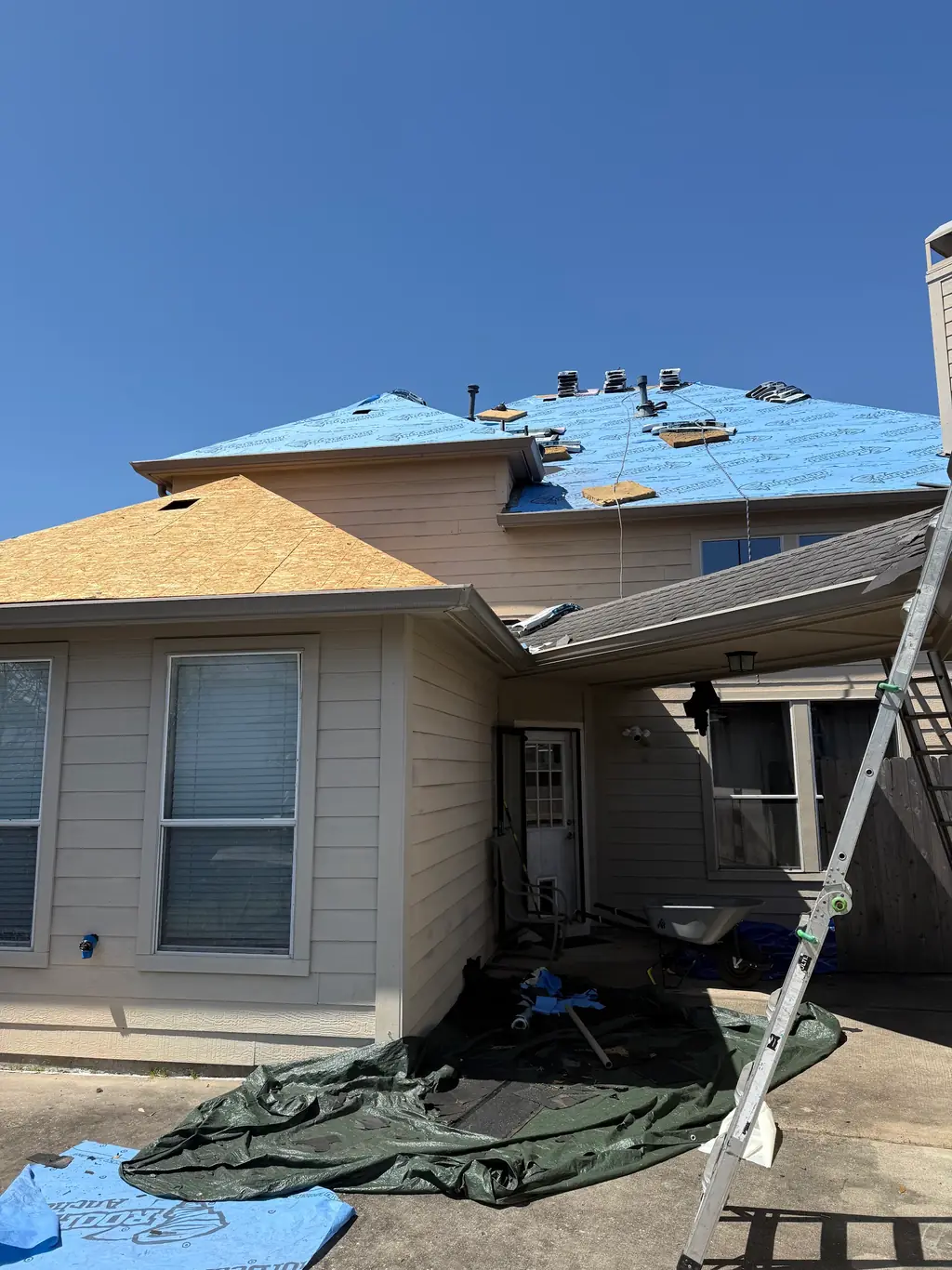
Most homeowners only see two moments of a re-roof: the truck pulling up and the truck pulling away. Everything that happens in between decides whether that roof holds up through the next hurricane season or starts leaking in three years. Here is what actually happens on a full tear-off and re-roof, and why each step matters more than it looks.
Tear-off comes first, and it tells you everything
The old roofing material comes off down to the wood deck, not just the top layer of shingles. This is the part a lot of cheaper crews try to skip by layering new shingles over old ones. It is also the point where the crew finds out what is actually underneath. A deck that looks fine from the ground can have soft spots, water staining, or rotted plywood once the shingles come off, usually around old vent boots, chimney flashing, or valleys where water has been sitting for years. If sections of decking need replacing, that gets addressed before anything new goes down. Skip this step and you are putting a new roof over a problem that will show up again.
What goes down before a single shingle does
Once the deck is sound, a synthetic underlayment goes down across the whole roof. This is the layer that actually keeps water out if wind ever drives rain up under a shingle, which happens more on the Gulf Coast than most homeowners realize. Drip edge gets installed along the eaves and rakes, and flashing goes in around every place water can find a way in: chimneys, plumbing vents, skylights, and the valleys where two roof planes meet. None of this is visible once the job is done, which is exactly why it is worth understanding before the crew arrives. A roof that looks identical from the street can perform completely differently depending on what happened at this stage.
Shingles go down course by course, with wind in mind
Starter strips go in along the edges first, then the field shingles are laid course by course working up the roof, with the nailing pattern and fastener count matched to the wind exposure this part of the coast actually sees. Ridge caps finish the job at the peaks and hips. This is where the difference between a rushed install and a careful one is most visible, because a shingle that is nailed high or short on fasteners can lift in the first serious storm even though it looked fine on installation day.
Ventilation gets overlooked, and it should not be
A roof needs to breathe. Ridge vents, soffit vents, or powered attic fans let hot, moist air escape from the attic space instead of baking the underside of the deck all summer and pushing heat down into the living space below. A re-roof is the easiest time to fix inadequate ventilation, because the roof deck is already exposed and adding or upgrading vents does not mean tearing anything back apart later. Skipping it does not show up as a problem on day one, it shows up years later as a shortened shingle life and higher cooling bills, which is exactly the kind of issue that is invisible until it is expensive.
Cleanup is not an afterthought
A re-roof generates a lot of debris, old shingles, nails, and torn-off underlayment, and a magnetic roller sweep of the yard and driveway at the end is what keeps a stray nail from ending up in a tire or a bare foot weeks later. Yard protection during the job, a dumpster or trailer for debris, and a final walk-around with the homeowner are all part of finishing the job properly, not extras.
Questions worth asking before work starts
- What happens to my landscaping and driveway during tear-off, and how is it protected
- What underlayment and fastener spec are you using, and why for this roof specifically
- How is decking replacement priced if you find rot once the old roof comes off
- What does the workmanship warranty cover, separate from the shingle manufacturer's warranty
A contractor who answers these clearly before the first shingle comes off is telling you something about how the rest of the job will go.
Timeline and cost, in plain terms
Weather permitting, most single-family tear-offs and re-roofs move fast once they start, since the crew is on-site working the whole time rather than coming and going. For context on cost, published starting ranges for a shingle roofing project run from $7,000 to $30,000, and metal roofing projects start between $15,000 and $75,000, with the final number driven by roof size, pitch, material choice, and how much decking needs to be replaced. Upper Hand Roofing & Construction does not pitch itself as the cheapest quote you will get. The stated focus is quality, transparency, and long-term value, which matters more on a roof than almost anything else in a home, since it is the one system that has to perform correctly the very first time it is tested by weather.
If your roof is already damaged from a storm rather than simply worn out, the process looks a little different, since insurance is part of the picture. That is covered in detail in the claims article on this site, but the short version is: document everything, get a real inspection fast, and do not wait on repairs while a claim is pending.
Upper Hand Roofing & Construction. (832) 632-1160
Call (832) 632-1160More articles
Storm Damage and Your Insurance Claim: The First 72 Hours
The decisions you make in the first three days after a storm affect whether your claim gets approved in full or gets picked apart.
Shingle vs Metal vs Clay Tile: How the Choice Really Gets Made on the Gulf Coast
Three roofing materials, three very different trade-offs once you factor in Gulf Coast heat, wind, and hail.