Siding
Siding
Fiber cement, wood, vinyl, brick and stone, installed with the flashing detail this climate actually needs.
Chapter 01
Fiber cement, wood or vinyl on a humid Gulf wall
Hardie fiber cement is what most homeowners in League City land on once they've priced the alternatives. It doesn't warp in the heat, it holds paint far longer than wood, and it stands up to the humidity here better than anything else in its price range. Wood siding still has a place, mainly on older homes where matching the original look matters more than low maintenance, but it needs repainting and caulking on a schedule that a Gulf summer doesn't forgive if it's skipped.
Vinyl is the budget option, and it has gotten better, but it's also the one most likely to warp against a wall that gets full afternoon sun on this coast. Brick and stone aren't siding in the traditional sense, but they come up on the same jobs, usually as an accent wall or a full veneer replacement after storm damage. Which material makes sense depends on the wall, the sun exposure, and what the homeowner wants to be doing to it in ten years.
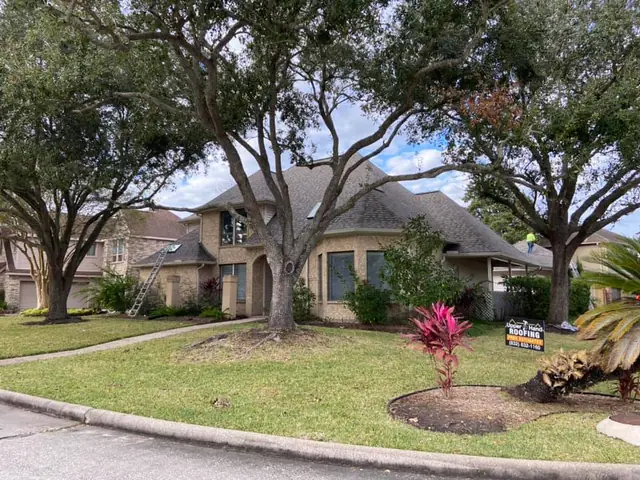
A large brick home with a crew member working on the roofline and a ladder set against the wall.
The moisture and flashing detail behind the panel
None of that siding does its job without what goes on underneath it first. A water-resistive barrier goes over the sheathing before a single panel goes up, and every window, door and penetration gets flashed so water sheds down and out instead of finding a way behind the wall. Skip that step, or rush it, and the siding can look perfect for years while moisture works on the sheathing behind it the whole time.
Seams get the same attention. Fiber cement panels expand and contract with heat and humidity here more than people expect, so the gaps, fasteners and caulk joints all get sized to move with the wall instead of cracking open the first summer. It's the part of the job that never shows in a finished photo and is the reason a siding job either lasts twenty years or needs redoing in five.
Chapter 03
Matching an existing elevation so a repair doesn't read as a patch
A lot of siding calls aren't a full tear-off. They're one wall damaged in a storm, or a section that rotted out around a leaking gutter, on a house where the rest of the siding is fine. That's a harder job in some ways than a full re-side, because the new section has to match the existing panels in profile, reveal and color closely enough that it doesn't read as an obvious patch from the street.
That means checking the exposure and lap of the existing siding before ordering material, not just matching it by eye, and sourcing a color that's close enough that a homeowner isn't left with one wall that's noticeably newer than the rest of the house.
When siding damage is a claim, not just a repair
Torn-back siding after a storm is one of the more common insurance calls Upper Hand gets, and it's usually accompanied by roof damage from the same event. Both get documented on the same visit, with photos of the torn panels, the exposed sheathing behind them, and anything the wind carried into the wall, so the claim reflects what actually happened rather than what's left standing by the time an adjuster shows up.
Upper Hand Roofing & Construction has been siding homes across League City and the surrounding counties since 2014. Call (832) 632-1160.
Storm-damaged siding is usually a roof claim too. See how Upper Hand handles that on the insurance claims page, or request an estimate for a full re-side or a single-wall repair.