Shingle vs Metal vs Clay Tile: How the Choice Really Gets Made on the Gulf Coast
Three roofing materials, three very different trade-offs once you factor in Gulf Coast heat, wind, and hail.
September 6, 2026 · 3 min read
Ask five roofers which material is best and you will get five different answers, mostly because the honest answer is that it depends on the house, the budget, and how long you plan to own it. Here is how the choice actually plays out for homes in and around League City.
Asphalt shingle: the default for a reason
Shingle roofing remains the most common choice on the Gulf Coast because it balances upfront cost against real-world performance reasonably well, and it is straightforward to repair if a section gets damaged in a storm without having to match discontinued material across an entire roof. Published starting ranges for a shingle roofing project run from $7,000 to $30,000 depending on roof size, pitch, and the shingle grade chosen. The trade-off is lifespan and wind resistance compared to metal, though a properly installed synthetic underlayment and correct nailing pattern go a long way toward closing that gap.
Metal: the upgrade that pays off over time
Metal roofing costs more upfront, with published starting ranges between $15,000 and $75,000, but it holds up to wind and hail better than shingle in most direct comparisons, sheds heat more effectively in Gulf Coast summers, and typically outlasts an asphalt roof by a wide margin. For homeowners planning to stay in a house long term, or who have been through a hail claim on a shingle roof before and want to reduce the odds of a repeat, metal is often the material that makes the math work despite the higher initial number.
The maintenance and noise questions people forget to ask
A metal roof in a rainstorm is louder than shingle if there is no solid decking or insulation dampening the sound, which surprises some homeowners who only think about the exterior benefits. On the maintenance side, shingle roofs need periodic inspection for granule loss and algae staining in a humid climate like this one, while a quality metal roof needs comparatively little beyond checking fastener integrity and sealant at penetrations over the years. Neither is maintenance free. The difference is what kind of maintenance you are signing up for, not whether you can skip it entirely.
Clay tile: heavier, different, and not for every roof
Clay tile is the least common of the three on this coast, and for good reason: it is significantly heavier than shingle or metal, which means not every roof structure can support it without reinforcement, and installation is a more specialized skill. Where it fits, clay tile brings a distinct look and real longevity, but it is a decision that has to start with a structural conversation about the roof deck and framing underneath, not just a style preference. Individual tiles can also crack under a direct impact, from hail or a fallen branch, and repairing a small section means sourcing a matching tile rather than a quick patch, which is a factor worth weighing against its long lifespan.
How the decision actually gets made
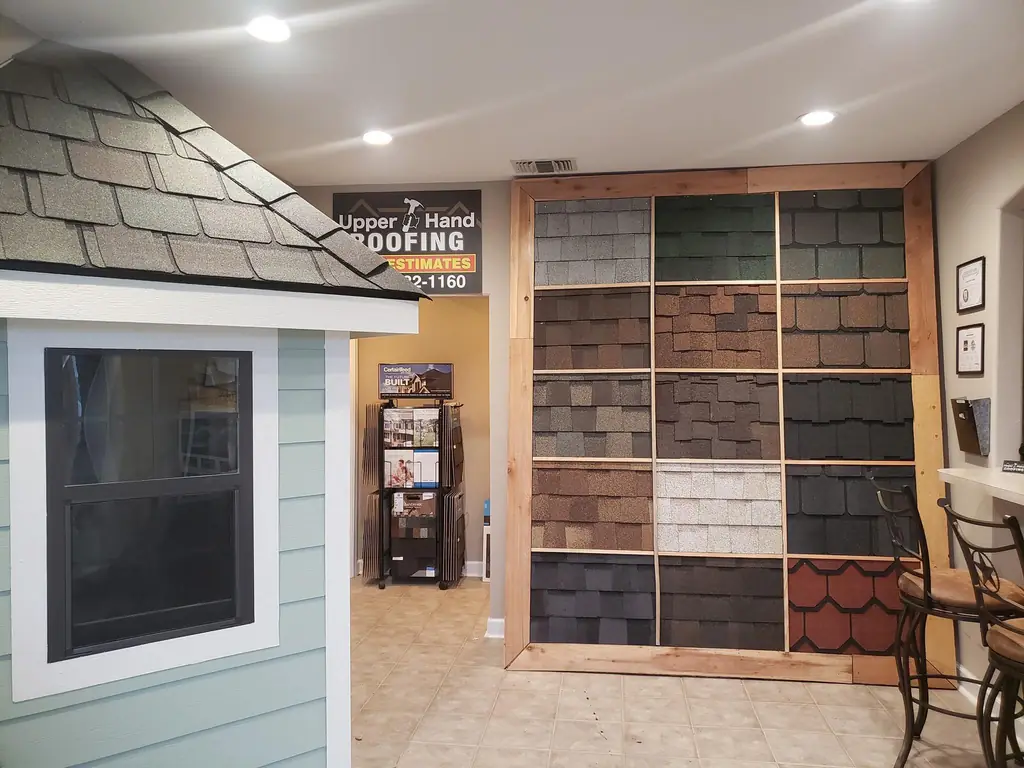
In practice, the choice usually comes down to three questions: how long do you plan to be in the house, what did the last storm cost you if this is a replacement rather than a first roof, and what does the budget actually allow right now versus what it could allow with financing. There is a full wall of real shingle color and style samples in the Upper Hand showroom in League City, which is a genuinely useful thing to stand in front of before deciding, because photos on a screen do not show texture, shadow lines, or how a color reads in direct Texas sun the way a physical sample does.
If this is a storm replacement, not a first roof
One more factor worth naming honestly: if you are replacing a roof because of storm damage and insurance is involved, the material decision sometimes gets simplified by what the claim actually covers, typically a like-for-like replacement of what was there. Upgrading to metal or tile at that point usually means covering the difference out of pocket, which is worth knowing before you fall in love with a material during the emotional aftermath of storm damage. A free inspection and an honest conversation about what your specific claim covers is the right place to start that conversation.
Upper Hand Roofing & Construction. (832) 632-1160
Call (832) 632-1160More articles
What Actually Happens During a Roof Tear-Off and Re-Roof
From the first pry bar to the last nail sweep, here is what a real re-roof looks like start to finish.
Storm Damage and Your Insurance Claim: The First 72 Hours
The decisions you make in the first three days after a storm affect whether your claim gets approved in full or gets picked apart.